
Texas Public Information Act
Most government records in Texas are open by default. The rule comes from the Texas Public Information Act, found in Government Code Chapter 552. The law sets a plain policy. Each person is entitled to complete information about the affairs of government unless the law expressly says otherwise. Courts read it in favor of access. That means a county office must hand over a record unless a specific law lets it withhold the file.
You can read the full text of the act in Texas Government Code Chapter 552. The act defines public information as material written, produced, collected, or kept under law or in connection with official business. It includes paper, email, and many electronic forms. The policy itself sits in Section 552.001, and the broad rule of access runs through the rest of the chapter.
Anyone can file a request. You do not have to live in Texas. You do not have to give a reason. A county agency cannot ask why you want a record before it responds.
Why Lubbock County Court Records Differ
Here is the key distinction many people miss. Texas courts are not subject to the Public Information Act for judicial records. The judicial branch runs on its own access rules. So a request that works for a sheriff file will not work the same way for a court file. The Texas judiciary spells this out on its open-records page, and it is worth a careful read before you send any request to a clerk.
The Texas judiciary open records policy explains the split between agency records and judicial records.
You can review the framework on the Texas judiciary open records policy page.
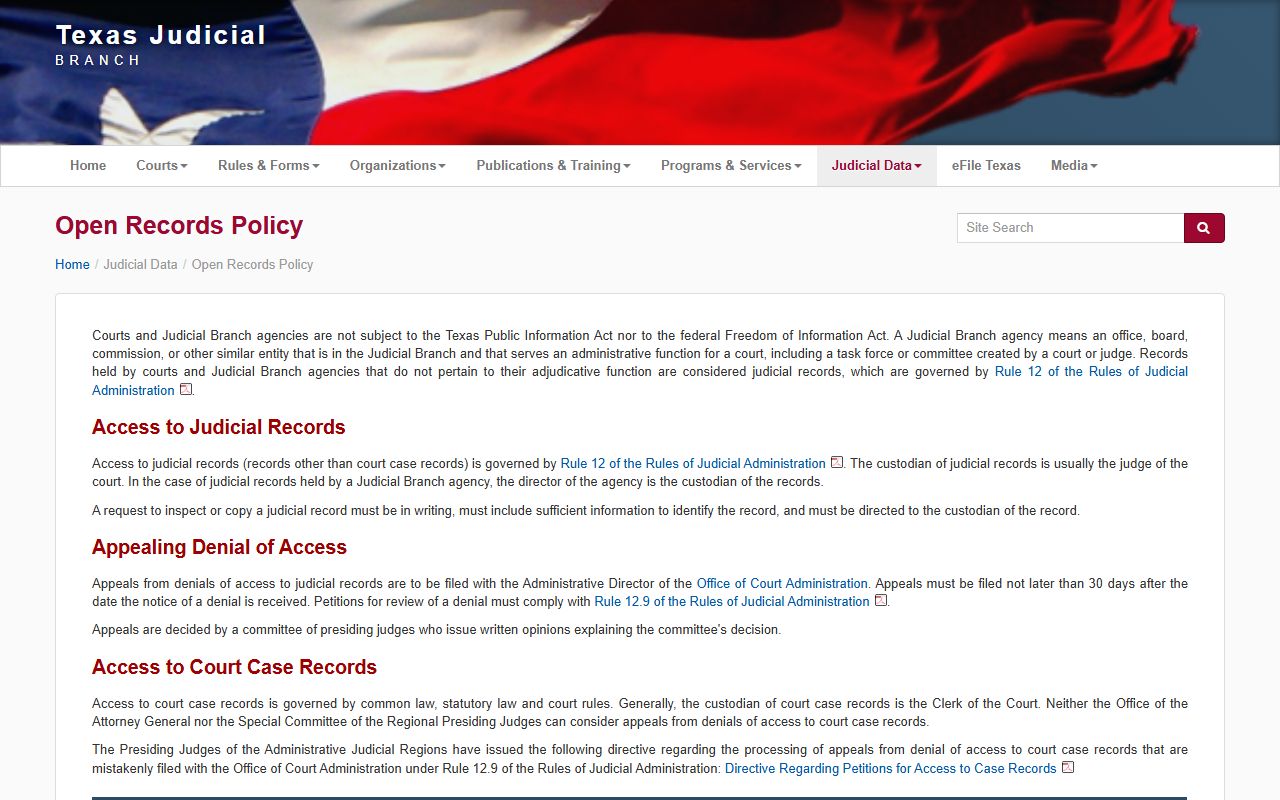
That policy makes clear that Rule 12 governs judicial records other than court case files, while court case files follow court rules and statutes instead.
So two regimes apply. Court case records, like a divorce file or a felony cause, follow common-law access, court rules, statutes, and Lubbock County's own electronic access policy. Judicial records that are not case files, like a court's administrative paperwork, follow Texas Rule of Judicial Administration 12. For the case files themselves, the county runs a free Public Access portal that shows the case index, parties, attorneys, and scheduling data, but not document images. For a full walkthrough of that portal, see the Lubbock County court records page.
What the Lubbock County Clerk Maintains
The County Clerk does far more than handle court files. Kelly Pinion leads the office, which keeps a wide range of public records for the county. Real property is a big part of the job. Deeds, liens, and official records all run through this office. The clerk also handles business filings, marriage records, and several niche record types. The District Clerk, by contrast, focuses on district court and county court at law case files. The two clerks split the work, and each indexes its own records.
The County Clerk keeps these public records beyond the courts.
- Real property records - deeds, mortgages, liens, and official property documents.
- Assumed names - "doing business as" filings for local businesses.
- Brands - livestock brand registrations recorded with the county.
- UCC filings - Uniform Commercial Code financing statements.
- Marriage records - licenses and certified marriage copies.
- Probate and guardianship - wills, estates, and guardianship files.
Vital records take an extra step. The County Clerk records marriages, but birth and death records after 1950 are not held there. For those, you contact the City of Lubbock Vital Records office at 806-775-2926. For estate files, the probate records page covers search and copy steps in more detail.
How to File a Lubbock County Public Records Request
The path depends on the record type. Agency records, like sheriff incident files or county administrative documents, go through the Public Information Act. You send a written request to the county or the sheriff. Court case records take a different route. Those go to the clerk or the custodian who holds the file. Address the request to the right office and you will get a faster answer. The sheriff's contact page notes that open-records requests should be made in writing.
- Identify which office holds the record. Court files go to the District Clerk or County Clerk. Sheriff and county agency files go through the Public Information Act.
- Describe the records you want with care. Give names, dates, and a document or case number when you have one.
- Put the request in writing. Mail, email, or an in-person form all work, depending on the office.
- Send agency requests to the county or sheriff as a Public Information Act request. Send court file requests to the clerk who holds the case.
- Wait for the response and any fee estimate the office gives you.
- Pay the stated fees, then pick up or receive the records by mail.
For records and copies, the County Clerk lists Countyclerk@lubbockcounty.gov and a phone line at 806-775-1048. The District Clerk runs division lines for civil, criminal, family, and archives, so call ahead to confirm where a file sits.
Arrive With Names and Dates
Clerk staff will not do open-ended searches for you. The County Clerk states plainly that the office will not conduct searches that are not authorized by statute. The one statutory search the office must perform is a Federal Tax Lien search under Texas Property Code 14.004(d). For everything else, the clerk points to Attorney General Opinion WW-607 from 1959. That opinion holds that the County Clerk has no duty to search the records under the clerk's control and then guarantee the result is correct.
So come prepared. The more you bring, the faster the visit goes.
- Full legal names of the parties involved.
- The date or date range tied to the record.
- A document number, volume and page, or case number when you have one.
- The record type, so the right division can pull the file.
Public-access computers at the courthouse let you search the index yourself. You find the file, note the number, then ask the clerk for a copy. That self-search step is the practical answer to the no-search rule.
Public Records Request Form Fields
A good request gives the office enough to find the file without guessing. Whether you write a letter or fill an office form, include the items in the table below. A clear request avoids the back-and-forth that slows a response.
| Field | Required | Notes |
|---|---|---|
| Requester Name | Yes | Your name and a way to reach you for the response. |
| Contact Method | Yes | Mailing address or email for the records and any fee estimate. |
| Description of Records | Yes | Be specific. Name the record type and the parties. |
| Party Names | Yes | Full legal names help staff find the right file. |
| Date Range | No | Narrows the search and lowers labor fees. |
| Document / Case Number | No | Speeds the pull when you already have it. |
| Format Preference | No | Plain copy, certified copy, or electronic format. |
For a marriage copy by mail, the County Clerk asks for the license reference number, both parties' names at the time of marriage, the date of marriage, the fee, and a self-addressed stamped envelope.
Response Timelines
The Public Information Act sets the pace for agency records. Government Code Section 552.021 says public information is available during the normal business hours of the governmental body. An office should act promptly. When a request needs review, the agency may seek an attorney general decision before it withholds anything.
Court records do not run on that same clock. Case files follow court rules and the county's electronic access policy, not the Public Information Act timeline. Plan for a short wait either way, since some files must be pulled from archives.
Note: Court case records do not follow the Public Information Act timeline, so confirm the clerk's own turnaround before you count on a deadline.
Lubbock County Public Records Fees
Fees turn on which office holds the file and what you ask for. A plain copy costs less than a certified one. A certified copy carries the clerk's seal and is the version courts accept. The County Clerk takes a cashier's check or money order for mailed marriage copies and does not accept personal checks. The table below lists common fees pulled from official county fee schedules.
| Item | Amount |
|---|---|
| Certified copy of marriage license | $21.00 |
| District Clerk certified copy (after five business days) | $1.00 per page |
| Small estate recording (first page) | $26.00 |
| Small estate recording (each added page) | $4.00 |
| Citation for posting | $8.00 each |
| Sheriff / constable posting service | $65.00 |
Probate filings carry their own set costs, with an original probate filing at $462.00 and a small estate or initial guardianship filing at $389.00. Confirm the current fee with the office before you mail payment.
Confidential Lubbock County Records
Not every record is open. The Public Information Act builds in exceptions, and other laws close whole categories of files. Section 552.101 is the big one. It excepts information made confidential by constitutional law, statute, or court decision. That single line pulls in many other rules, from juvenile files to medical data. So a record can be public in form yet closed by a separate law.
Several common categories stay out of public view.
- Juvenile records - restricted under the Texas Family Code juvenile justice rules.
- Medical and health data - protected health information is not public information under the act.
- Social Security numbers - redacted under Government Code Section 552.147 without an attorney general decision.
- Active law-enforcement files - may be withheld under Section 552.108 while a case is open.
- Sealed and expunged records - removed from public access by court order.
Sealed and expunged files take this further. An expunction can erase a qualifying arrest record. The District Clerk runs an expunctions line for those motions. Nondisclosure orders limit release of some criminal history. For how arrest data is handled, see the Lubbock County criminal records page.
Self-Help and Legal Aid Resources
You do not have to figure out a records request alone. Two state resources help people who handle their own filings. The first walks through court forms and procedures in plain language. The second is a state-run law library with guides, forms, and statute access. Both are free to use.
The Texas Court Help site offers self-help guidance for people without a lawyer.
You can start at Texas Court Help for plain-language steps on common court matters.
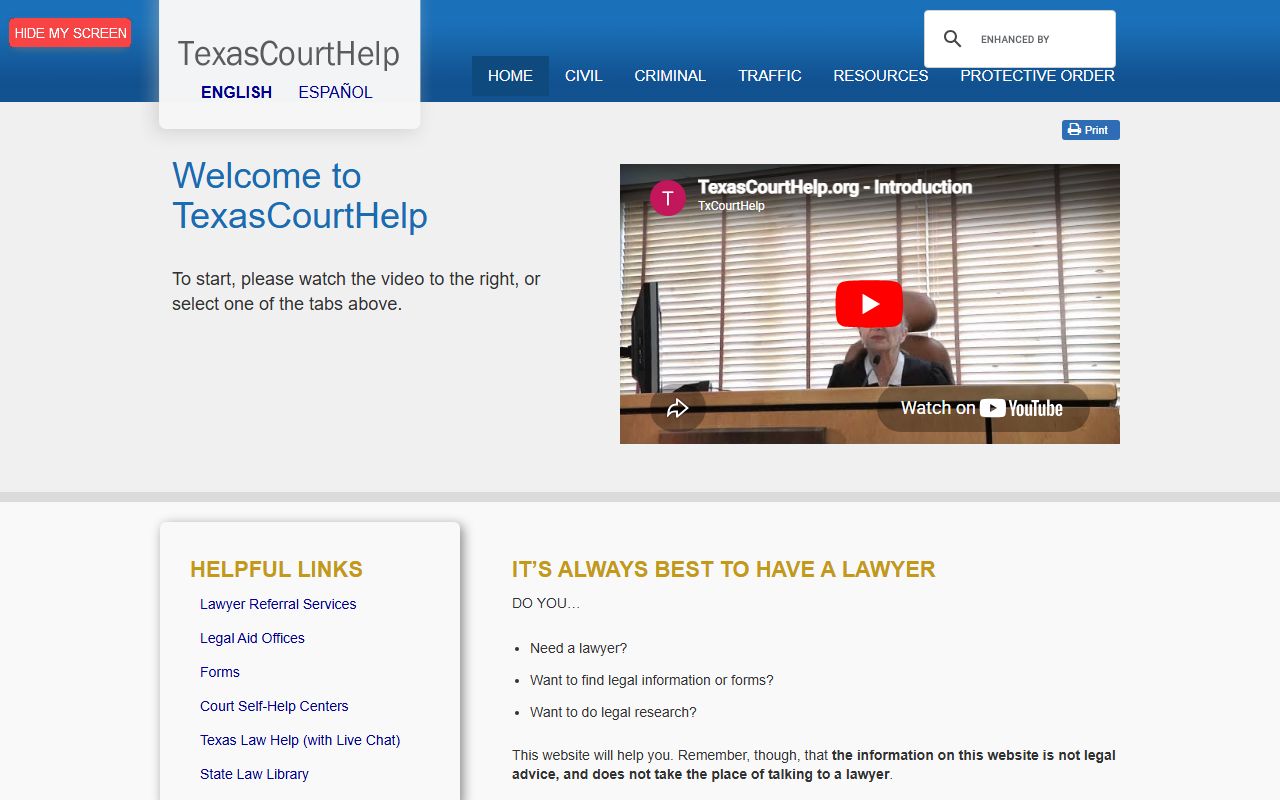
That self-help portal points to forms and instructions that pair well with a Lubbock County public records request.
The Texas State Law Library is the other strong stop for forms and statute text.
Browse the Texas State Law Library for legal research guides and downloadable forms.

The library's guides explain how the Public Information Act and court rules apply when you seek a Lubbock County record.