
How to Find Recently Released Lubbock County Inmates
The Lubbock County Sheriff posts an active jail roster, not a labeled release list. That is the first thing to understand. The roster shows who sits in the Lubbock County Detention Center right now. When a person is released, their name drops off the active roster. So the fastest, simplest check is this: search the roster, and if the name no longer appears, the person has likely left county custody. The official sheriff text does not promise a public release-date list, a lookback window, or an export of past releases.
Because of that gap, a released inmate search in Lubbock County leans on a few sources at once. Use the active roster to see current custody. Call the Detention Center to confirm a status. Pull court or bond records from the clerk to see if a bond was posted or a case closed. Each one tells part of the story.
- Search the active jail roster by name, booking number, or SO number; a missing name suggests release.
- Call the Detention Center records line to confirm whether a person is still held.
- Check court or bond records through the clerk to see if a bond was posted or a case ended.
- Use state or federal tools when a person was sentenced and moved out of the county jail.
The sheriff also runs in-custody programs that touch the release process, from job readiness to education. The inmate programs page is a good place to see what a person may have worked on before leaving.
The sheriff lists rehabilitative, educational, religious, and job-readiness programs that prepare people for release on its inmate programs page.
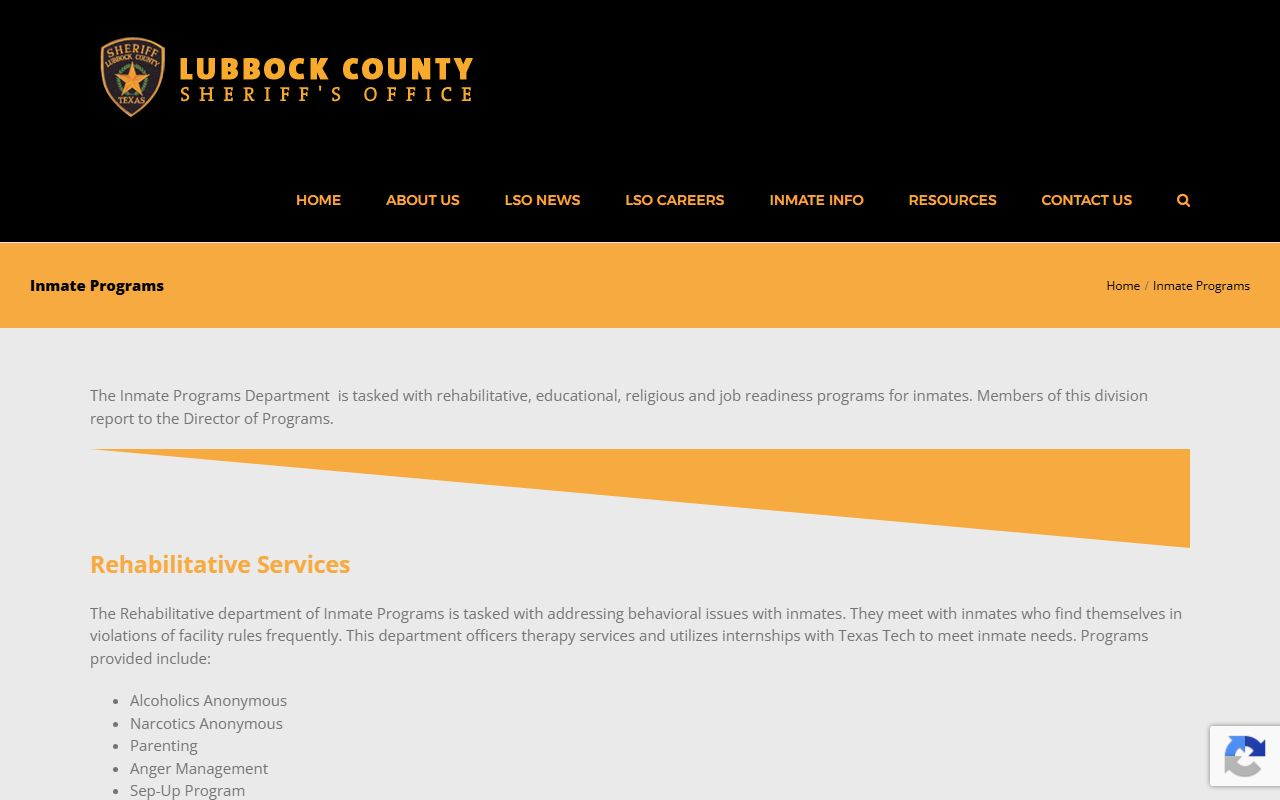
Those programs connect to the wider re-entry effort, which matters once a Lubbock County inmate is released and starts to rebuild.
For the live roster itself and the booking process, see the Lubbock County inmate records page. It walks through the same name, booking number, and SO number search keys in more detail.
Setting Up Release Notifications
Waiting and checking a roster over and over is hard. There is a better way. VINELink lets you register for an automatic alert when a person's custody status changes. The service covers participating agencies and sends notice by phone, email, text, or app, depending on the jurisdiction. It is free to register. Victims use it most, but anyone can sign up to track a custody status they have a reason to follow.
Search fields on VINELink vary by state and agency. In general you pick a state, then enter an offender name or ID, and you can filter by facility or agency. Once you find the right person, you set up the alert and confirm a contact method.
- Go to VINELink and choose Texas as the state.
- Search by the person's name or ID, then pick the matching record and facility.
- Register for alerts by phone, email, text, or app, and confirm your contact method.
VINELink is a notification and status tool, not a court file. It tells you about custody changes. It does not give you the case record, the charges, or the sentence. For that you still go to the clerk or the court.
Note: VINELink alerts depend on data from participating agencies, so confirm a release directly with the Detention Center before you rely on a notification.
Searching State and Federal Released Inmates
County jail is not the end of the line for everyone. People who get a prison sentence move to the Texas Department of Criminal Justice. People convicted of a federal crime go to the Bureau of Prisons. Both agencies run their own public locators, and both are separate from the Lubbock County jail roster. If a person is no longer in the county jail, the next stop is often one of these two systems.
TDCJ holds people sentenced to or under state custody. Its offender information can show custody location, offenses, and projected release or parole data, depending on the record. You can also call the state for inmate location and general help. The Huntsville lines are 936-295-6371 and 800-535-0283. The TDCJ search itself is reached through the offender information page.
| Field Label | Type | Required | Notes |
|---|---|---|---|
| Last Name | Text | One identifier required | Core field for a TDCJ offender search. |
| First Name | Text | No | Useful paired with the last name. |
| TDCJ Number / SID | Text | No | Best for an exact match when the number is known. |
Search the state system through the official TDCJ inmate information page, which supports a name or number lookup for sentenced offenders.
The federal locator works differently. BOP covers federal inmates from 1982 to the present. You can search by a number type or by name with race, age, and sex filters. A person held in the Lubbock County jail on local charges will not show up in BOP unless they are in federal custody.
| Field Label | Type | Required | Notes |
|---|---|---|---|
| Number type | Radio / dropdown | No | BOP Register, DCDC, FBI, or INS number. |
| Number | Text | No | Search directly by the selected number type. |
| First / Middle / Last | Text | Last required for name search | Name-based lookup. |
| Race | Dropdown | No | Demographic filter. |
| Age | Number | No | Demographic filter. |
| Sex | Dropdown | No | Male or female. |
The federal Bureau of Prisons inmate locator returns the facility, register number, and release status for people in federal custody.
What a TDCJ Record Shows
A state offender record holds more than a name. When you find a person in the TDCJ system, the profile can pull together several fields that help confirm identity and status. The exact layout shifts by record type, but the categories below are common in a state offender result. They give you enough to tell whether a person is still inside, on parole, or set for release.
| Field | What It Shows |
|---|---|
| Name | The offender's legal name and any aliases on file. |
| TDCJ / SID Number | The state ID used to match the record exactly. |
| Custody Location | The unit or facility where the person is held. |
| Offense | The charge or charges tied to the sentence. |
| Projected Release / Parole | An estimated date or parole eligibility, when posted. |
Read these fields together, not alone. A projected date can move. A parole review can change a status. When the date matters, call the state line and confirm.
Verifying Release in Person or By Phone
Online tools lag. A roster may not update the moment a person walks out. So a phone call is often the surest check for a recent Lubbock County release. The Detention Center on North Holly Avenue handles jail custody, and its records staff can confirm whether a person is still held. Have a full name and, if you can, a booking number or SO number ready before you call.
You can reach the Detention Center at 806-775-7009 or 806-775-7048. For a bond question, the sheriff's finance staff handle inmate accounts and bond-related transactions. Court and bond records from the clerk can also show whether a bond was posted, which often lines up with a release.
Lubbock County Detention Center
3502 N. Holly Avenue
Lubbock, TX 79403
806-775-7009 / 806-775-7048
An in-person visit is also an option, but a call is faster for a simple status check. The jail confirms custody. The clerk confirms the court file. Use both when a release affects a legal or personal choice.
The Sex Offender Registry
A released person who must register will show up in a separate state system. The Texas DPS sex offender registry is a community-notification database, not a release list. It will not tell you the day someone left jail. It will tell you whether a person has a current registrant profile and a listed address after release. That is useful for neighbors, parents, and anyone doing a basic safety check on a known name.
The registry supports a few search paths. You can look up a person by name. You can search by address, city, or ZIP. The system also supports a map and radius search, so you can see registrants near a location.
| Field Label | Type | Required | Notes |
|---|---|---|---|
| Name | Text | No | Search by a registrant name. |
| Address / City / ZIP | Text | No | Location-based lookup. |
| Map radius | Map / filter | No | Find registrants near a point on the map. |
A registry profile usually carries a set of public fields. The inventory below reflects the kinds of data the registry shows for a listed person.
- Registrant name and known aliases.
- Photo, when posted.
- Physical description, such as age, sex, height, and weight.
- Listed address or area.
- Offense and risk level, where shown.
Run the search through the official Texas DPS sex offender registry. The state DPS also explains registry rules on its criminal history and registry FAQ.
Parole and Probation Information
Not every release means a clean break from the system. Many people leave jail or prison under supervision. Parole is supervised release from a prison sentence. Probation, called community supervision in Texas, is a court-ordered alternative to jail time. A person on either one must follow rules, report to an officer, and avoid new offenses. A violation can send the person back into custody.
State parole and supervision tie into the TDCJ system, so a state offender record can show parole status or eligibility. For local probation, the case lives with the court, and the clerk holds the file. If you are tracking a release condition, the court record is the place to confirm the terms.
Reporting a suspected violation goes through the supervising agency or the court, not this site. When you need the exact terms of a person's supervision, pull the case from the clerk or call the supervising office.
Reentry Resources in Lubbock County
Leaving custody is a hard reset. Housing, a job, an ID, and treatment all have to come together fast, and that is where re-entry help matters. The Lubbock County Sheriff runs a Re-Entry Program that works with people while they are still inside, so they can return to the community more safely. Services include emergency or sober living housing, employment and career development, and help getting vital documents like a birth certificate or ID.
The program does not work alone. It partners with several local agencies for education, peer support, and job placement. Those partners give a released Lubbock County resident real places to start.
- Goodwill Career Resource Center - job training and career development.
- Lubbock VA - services for veterans leaving custody.
- Voice of Hope - support and advocacy services.
- VetStar - veteran-focused re-entry support.
- Workforce Solutions of the South Plains - job placement and workforce help.
To start a new professional connection with Re-entry Services, the contact number is 806-775-7065. The contact card below pulls the key details into one place.
Sheriff Re-Entry Services
Lubbock County Sheriff's Office
Lubbock, TX
806-775-7065
The sheriff names its partner agencies and lists housing, job, and document help on its re-entry services page.
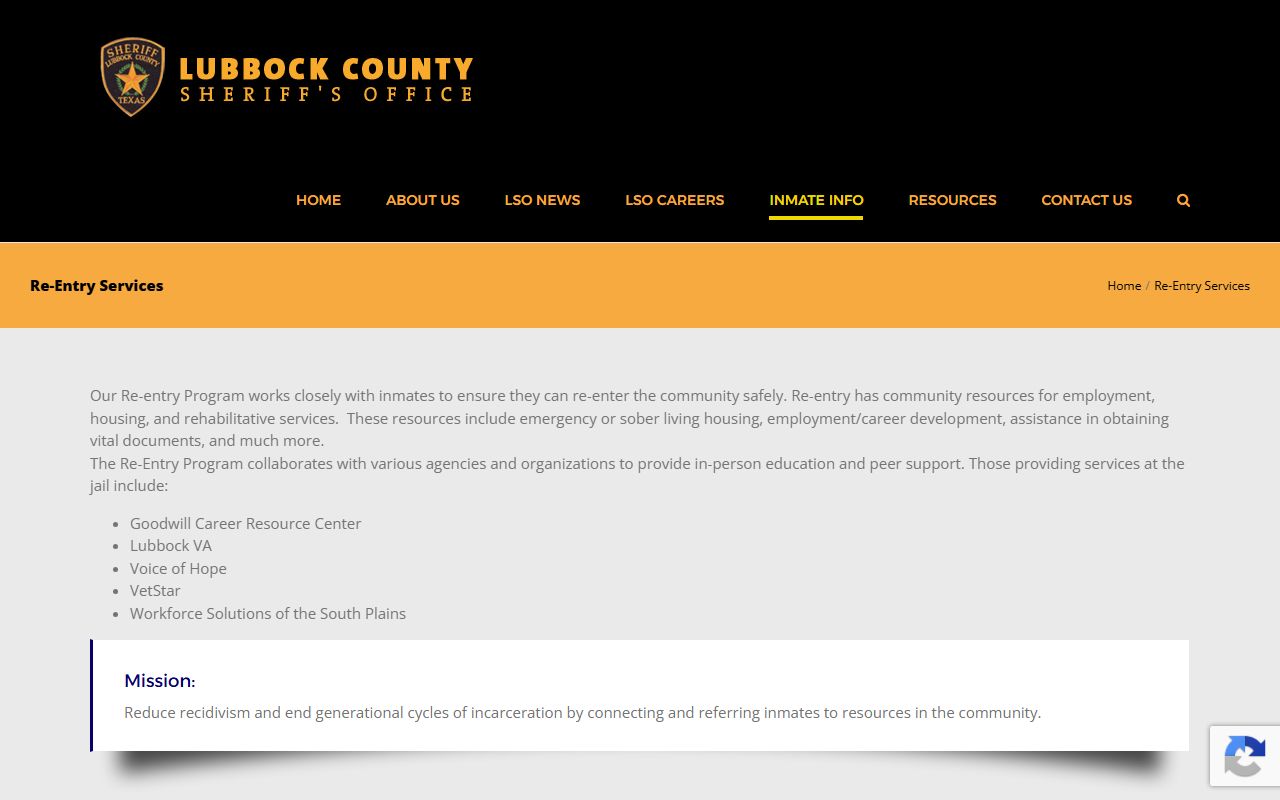
That page shows the local partner list and the services a released Lubbock County inmate can tap while building a fresh start.
Civil Rights Restoration After Release
A felony conviction changes some rights, and people often ask what comes back after release. Voting is the common question. In Texas, a person convicted of a felony cannot vote while incarcerated, on parole, or on probation. The right to vote is generally restored after the full sentence is done, including any supervision. There is no extra application step in Texas once the sentence and supervision end.
Firearm rights are more complex. A felony conviction, and some domestic violence offenses, can restrict gun possession under both state and federal law. Restoration is not automatic and not simple. It often needs legal counsel and may involve more than one layer of law. Do not assume a right has returned without checking.
Rules can change, and a single case can have its own twists. For the final word on voting eligibility after a conviction, verify with the Texas Secretary of State. For firearm questions, talk to a lawyer who knows both the state and federal rules.
Note: Voting eligibility after a felony depends on completing all supervision, so confirm your status with the Texas Secretary of State before you register.